
The Application of Fluorspar in the Ceramic and Tile Industry: A Comprehensive Technical Review of Its Role, Benefits
2025-11-20
The Role of Fluorite in the Ferroalloy Industry and Its Impact on Metallurgical Processes Introduction
2026-05-09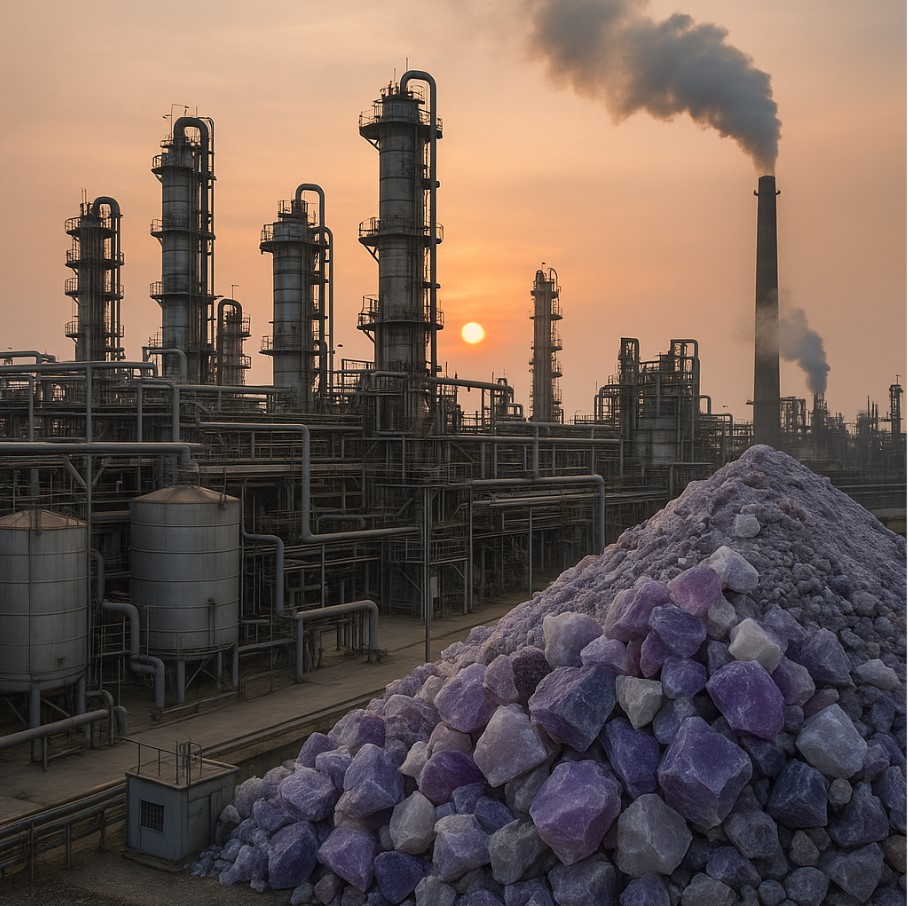
Introduction
Fluorochemistry represents one of the most advanced and strategically important branches of modern chemistry. A wide range of technologies that now form the backbone of the global economy—such as lithium-based batteries, semiconductor manufacturing, high-performance polymers, pharmaceutical production, medical devices, and clean energy systems—are directly or indirectly dependent on fluorinated compounds. The unique characteristics of fluorine, including its highest electronegativity among all elements, exceptional chemical stability, and ability to form extremely strong bonds, have positioned fluorinated materials as indispensable components of advanced technologies.
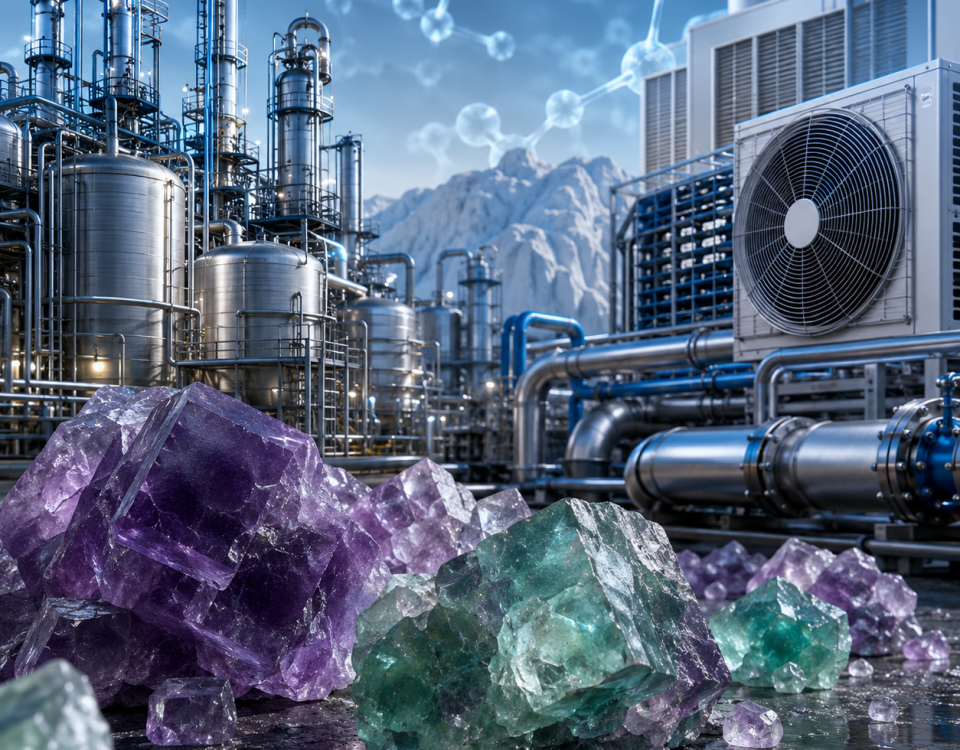
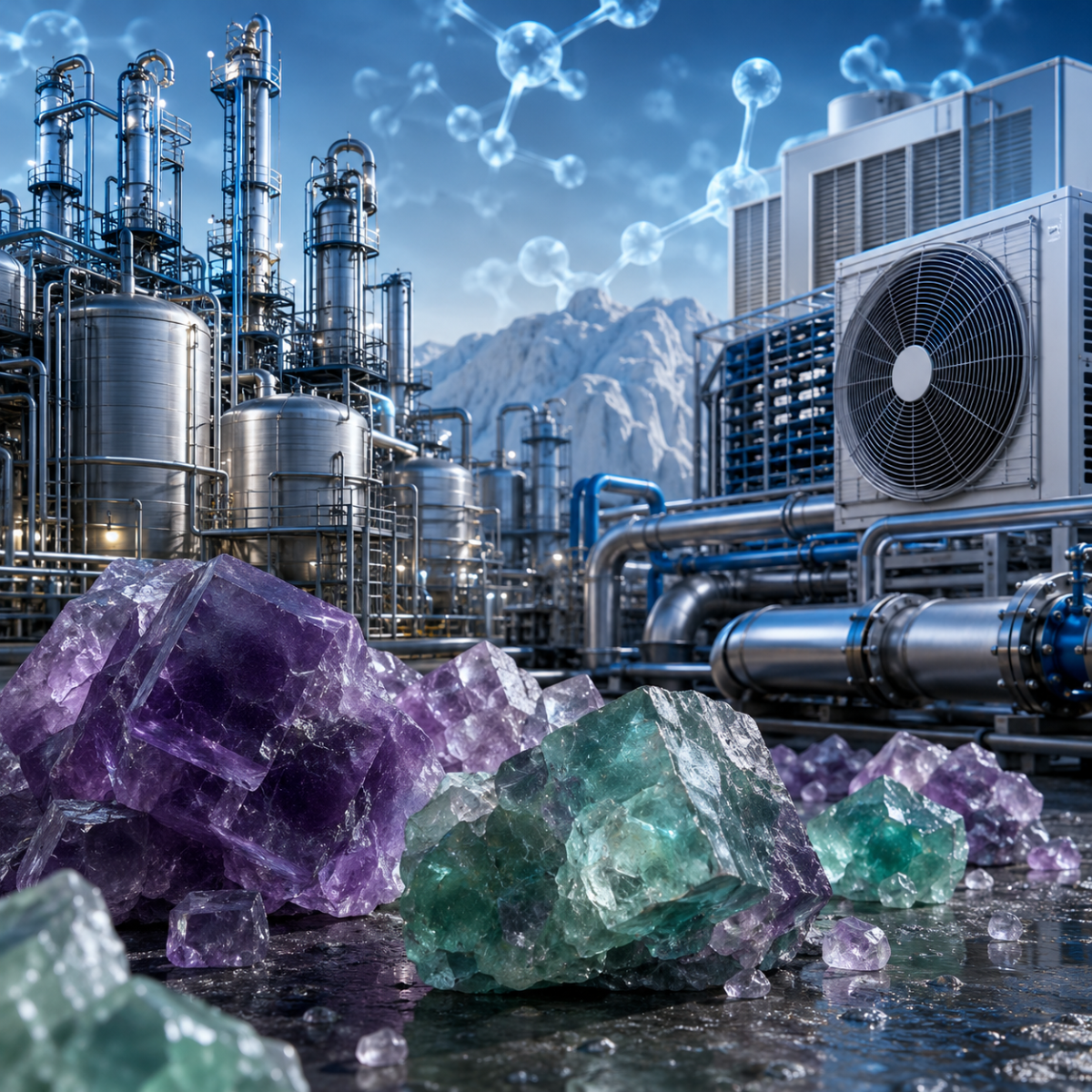
At the core of this vast and complex value chain lies a mineral that appears simple in composition yet is strategically critical on a global scale: fluorspar (calcium fluoride, CaF₂). Fluorspar is the primary raw material for the production of anhydrous hydrofluoric acid (AHF), which serves as the starting point for nearly all fluorochemical manufacturing pathways. Without fluorspar, neither fluoropolymers nor specialty gases for electronics, nor many emerging energy technologies could be produced.
This article adopts a forward-looking analytical perspective to examine the future of the global fluorochemical industry and to explain why fluorspar is becoming one of the most strategic minerals of the coming decades. The objective is to provide a comprehensive and in-depth understanding of fluorspar’s central role in shaping the future of fluorochemistry.
Fluorochemistry as the Intersection of Science, Industry, and Future Technologies
Fluorochemistry is not merely a laboratory-based scientific discipline; it represents a powerful intersection of scientific research, industrial engineering, and global technological demand. Fluorinated compounds enable performance characteristics that are largely unattainable using other chemical systems. Resistance to extreme temperatures, outstanding chemical inertness, hydrophobicity, low friction coefficients, and excellent electrical insulation properties are among the features that have expanded their industrial relevance.
Historically, fluorochemistry was primarily associated with traditional sectors such as refrigerants and aluminum production. Today, however, its scope has expanded dramatically, placing fluorine-based materials at the heart of advanced manufacturing. This transformation has elevated fluorochemistry from a supporting chemical industry to a strategic industrial sector whose growth is influenced not only by market demand but also by geopolitical dynamics, environmental regulation, and the global trajectory of technological development.
Growing Global Demand for Fluorinated Materials
One of the defining factors shaping the future of fluorochemistry is the accelerating global demand for fluorinated products. This growth is not accidental; it is driven by structural changes in the global economy.
A primary driver is the global transition toward clean energy systems and electrification. Electric vehicles, energy storage technologies, smart grids, and renewable energy infrastructure all rely heavily on advanced chemical materials. Fluorinated compounds play a critical role in this transition. Electrolyte salts used in lithium-ion batteries, fluorinated binders in electrode materials, and protective coatings resistant to heat and chemical degradation are just a few examples. As electric vehicle production continues to expand across China, Europe, North America, and other regions, demand for fluorochemical products is expected to increase substantially.
Another major driver is the rapid expansion of the electronics and semiconductor industries. Advanced semiconductor manufacturing processes—particularly at sub-5-nanometer scales—are impossible without fluorinated gases. These gases are essential for plasma etching and chamber cleaning, ensuring precision, yield, and reliability in chip fabrication. The growth of artificial intelligence, cloud computing, the Internet of Things, and next-generation telecommunications networks continues to fuel rising consumption of these materials, reinforcing fluorochemistry as a cornerstone of digital infrastructure.
A third factor is the increasing use of fluorinated engineering polymers. Materials such as PTFE, PVDF, FKM, and other fluoropolymers are widely employed in aerospace, medical devices, pharmaceuticals, chemical processing, oil and gas, and nuclear energy. Their unique combination of durability, chemical resistance, and thermal stability makes them essential for applications where conventional materials fail. As demand for lightweight, long-lasting, and high-performance materials grows, fluoropolymers are becoming foundational to many emerging technologies.
Fluorspar as the Foundation of the Fluorochemical Value Chain
At the center of all these developments lies fluorspar. Its significance extends far beyond that of a conventional industrial mineral; it is the foundation of the entire fluorochemical value chain. More than two-thirds of the fluorspar mined globally is ultimately converted into hydrofluoric acid, which serves as the precursor for hundreds of fluorinated compounds.
What distinguishes fluorspar from many other raw materials is its irreplaceability. Unlike metals or hydrocarbons that may have alternative sources or synthetic substitutes, fluorspar remains the only economically viable feedstock for fluorine-based chemistry. Without calcium fluoride, large-scale and cost-effective production of hydrofluoric acid is not feasible. This reality has led many countries—including the United States, the European Union, China, Japan, and India—to classify fluorspar as a critical or strategic mineral.
In recent years, pressure on global fluorspar supply has intensified. Declining ore grades in mature mining regions, rising extraction costs, and surging demand from high-technology industries have collectively tightened the supply-demand balance. As a result, securing reliable access to high-quality fluorspar has become a strategic priority for fluorochemical producers worldwide.
Structural Transformation of the Fluorochemical Industry
The fluorochemical industry is undergoing a profound structural transformation. This transformation encompasses changes in product portfolios, production standards, and geographic distribution of capacity.
From a product perspective, the industry is shifting away from commodity-grade materials toward high-value, specialized fluorochemicals. Next-generation refrigerants with low global warming potential, ultra-high-purity gases for semiconductor manufacturing, and advanced fluoropolymers designed for specific applications are increasingly dominant. These products require raw materials of exceptional purity, which in turn raises the quality requirements for fluorspar itself.
From a production standpoint, environmental pressures have forced the industry to adopt cleaner and more efficient technologies. Emission control, fluorine recovery systems, wastewater treatment, and energy-efficient processes are no longer optional but mandatory. This trend favors large, technologically advanced producers while marginal or non-compliant operations gradually exit the market.
Environmental and Regulatory Dimensions of Fluorochemistry
Fluorochemistry occupies a unique position as both an essential industrial sector and one of the most heavily regulated branches of chemical manufacturing. Fluorinated compounds, if improperly managed, can pose environmental risks. Consequently, the future of the industry is closely linked to its ability to comply with increasingly strict regulatory frameworks.
One of the most significant regulatory trends is the restriction of high-global-warming-potential gases. While such regulations limit the use of certain fluorinated compounds, they do not reduce overall fluorine demand. Instead, they accelerate the transition toward newer, more environmentally acceptable materials that often require higher-purity fluorine inputs and more sophisticated production processes. In this sense, environmental regulation reshapes fluorochemical consumption rather than diminishing it.
Geographic Shifts and the Role of Fluorspar-Rich Countries
Future developments in fluorochemistry will also redefine the geography of production and supply. China remains the dominant force in fluorochemical manufacturing, but declining ore quality and rising domestic consumption present challenges to its long-term dominance. At the same time, countries with significant fluorspar reserves and growing processing capabilities are gaining strategic importance.
Nations such as Iran, India, and Mexico possess valuable fluorspar resources, favorable geographic positions, and opportunities to expand downstream processing. These factors enable them to play increasingly influential roles in the global fluorochemical supply chain, particularly as diversification away from single-source dependence becomes a strategic objective for many industrialized economies.
Conclusion
The future of the fluorochemical industry is inseparable from the growth of advanced technologies, clean energy systems, high-performance materials, and the digital economy. At the center of these developments lies fluorspar, an irreplaceable mineral that serves as the primary gateway to fluorine chemistry. Rising demand for fluorinated gases, polymers, battery materials, and specialty chemicals is elevating fluorspar from a conventional industrial mineral to a globally strategic resource.
In the coming decades, countries and companies capable of extracting, processing, and supplying high-purity fluorspar in a stable and environmentally responsible manner will occupy critical positions within the fluorochemical value chain. Fluorspar is far more than a raw material; it is the foundation of a technological ecosystem that will shape the future of global industry. Understanding its strategic importance is essential for policymakers, industrial leaders, and investors engaged in the evolving landscape of fluorochemistry.