The Future of Fluorochemistry Worldwide and the Strategic Role of Fluorspar
2025-12-12
How Does Fluorite Form in Nature?
2026-05-30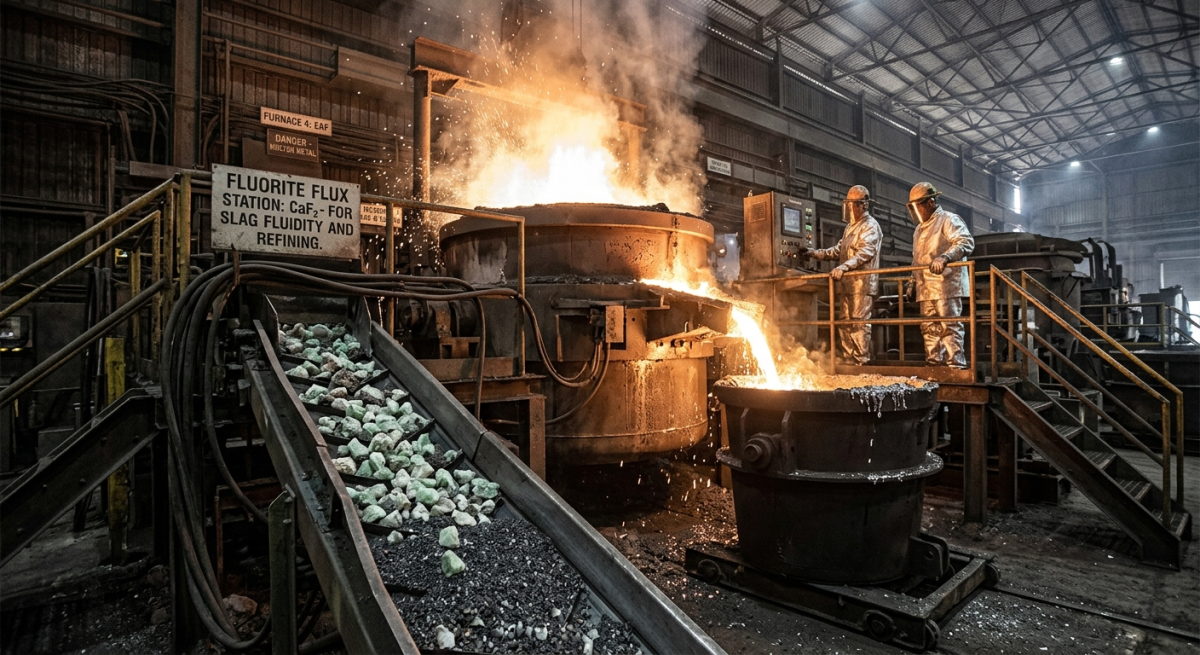
Introduction
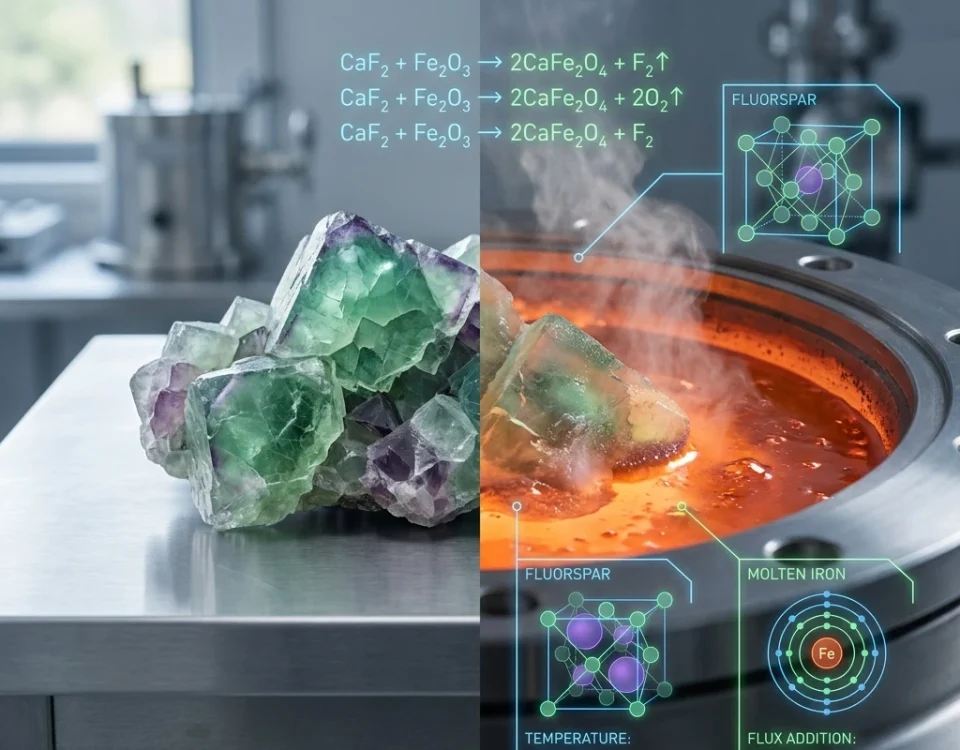
Fluorite, also known as fluorspar (CaF₂), is one of the most important industrial minerals widely used in metallurgical industries. Due to its unique physical and chemical properties, such as lowering the melting temperature of slag, improving slag fluidity, and assisting in the removal of impurities, fluorite plays a vital role in several industries including steelmaking, aluminum production, chemical manufacturing, and ferroalloy production.
The ferroalloy industry is a critical part of the global steel production chain. Ferroalloys are alloys of iron combined with elements such as silicon, manganese, chromium, and nickel. These materials are essential for improving the mechanical properties, strength, and corrosion resistance of steel. During ferroalloy production, controlling furnace conditions, slag composition, and reaction efficiency is extremely important. In this context, fluorite is commonly used as an effective metallurgical flux that enhances furnace performance and improves overall production efficiency.
The Role of Fluorite in Ferroalloy Production
Ferroalloys are generally produced in electric arc furnaces or submerged arc furnaces through high‑temperature reduction processes. In these furnaces, raw materials such as metal ores, carbon sources like coke or coal, and fluxing agents are charged into the furnace and heated to very high temperatures to produce the desired alloy.
During the smelting process, slag plays a crucial role in controlling metallurgical reactions and separating impurities from the molten metal. The chemical composition and physical behavior of slag significantly affect energy consumption, process stability, and the quality of the final ferroalloy product.
Fluorite acts as a slag modifier in ferroalloy production. By reducing slag viscosity and increasing slag fluidity, fluorite improves heat transfer and mass transfer inside the furnace. Increased slag fluidity also facilitates the separation of molten metal from slag, which leads to higher metal recovery rates and improved production efficiency. In addition, fluorite helps dissolve certain oxides such as silica (SiO₂) and alumina (Al₂O₃) within the slag, improving the overall metallurgical performance of the smelting process.
Fluorite Consumption in the Ferroalloy Industry
The amount of fluorite used in ferroalloy production depends on several factors, including the type of ferroalloy being produced, the chemical composition of raw materials, furnace design, and operating conditions. In many ferroalloy plants, fluorite is added to the slag mixture along with materials such as lime and dolomite to regulate the physical and chemical properties of the slag.
In the production of ferroalloys such as ferromanganese, ferrochrome, and ferrosilicon, proper slag control is essential for maintaining stable furnace operation. The addition of fluorite helps reduce the melting temperature of slag and improves its fluidity, which supports more efficient reduction reactions inside the furnace.
As a result, fluorite contributes to improved process efficiency, reduced energy consumption, and more stable furnace performance. These benefits make fluorite an important flux material in many ferroalloy production processes.
Characteristics of High‑Quality Fluorite for Ferroalloy Applications
The quality of fluorite used in metallurgical industries has a direct impact on furnace efficiency and production performance. Fluorite used in ferroalloy production should contain a high percentage of calcium fluoride (CaF₂) and minimal impurities.
Key characteristics of high‑quality metallurgical grade fluorite include:
- High CaF₂ content
- Low silica (SiO₂) content
- Low sulfur and phosphorus levels
- Low moisture content
- Suitable particle size distribution for furnace charging
These properties ensure that fluorite performs effectively as a fluxing agent and improves slag behavior during high‑temperature metallurgical operations.
Advantages of Using Fluorite in Ferroalloy Production
The use of fluorite in ferroalloy production offers several important advantages. One of the main benefits is the improvement of slag fluidity, which allows better separation between molten metal and slag. This results in higher metal recovery and reduced production losses.
Another advantage of fluorite is its ability to reduce the melting temperature of slag. Lower slag melting temperatures can significantly reduce the energy required for smelting operations and improve furnace efficiency.
Fluorite also contributes to better impurity removal from molten metal and helps maintain stable furnace conditions during the smelting process. Improved heat transfer, better slag control, and enhanced process stability are among the key reasons why fluorite is widely used in the ferroalloy industry.
Conclusion
Fluorite, or fluorspar, is an essential industrial mineral in modern metallurgical industries. In ferroalloy production, fluorite plays a significant role in improving slag properties, increasing slag fluidity, and facilitating impurity removal during high‑temperature smelting processes.
Using high‑quality fluorite in ferroalloy manufacturing can improve production efficiency, reduce energy consumption, and enhance the quality of the final product. For this reason, fluorite remains an important raw material in the ferroalloy industry and a key component in the global steel production supply chain.