How Does Fluorite Form in Nature?
2026-05-30
Fluorspar in Lithium-Ion Batteries: Driving the Future of Clean Energy
2026-06-29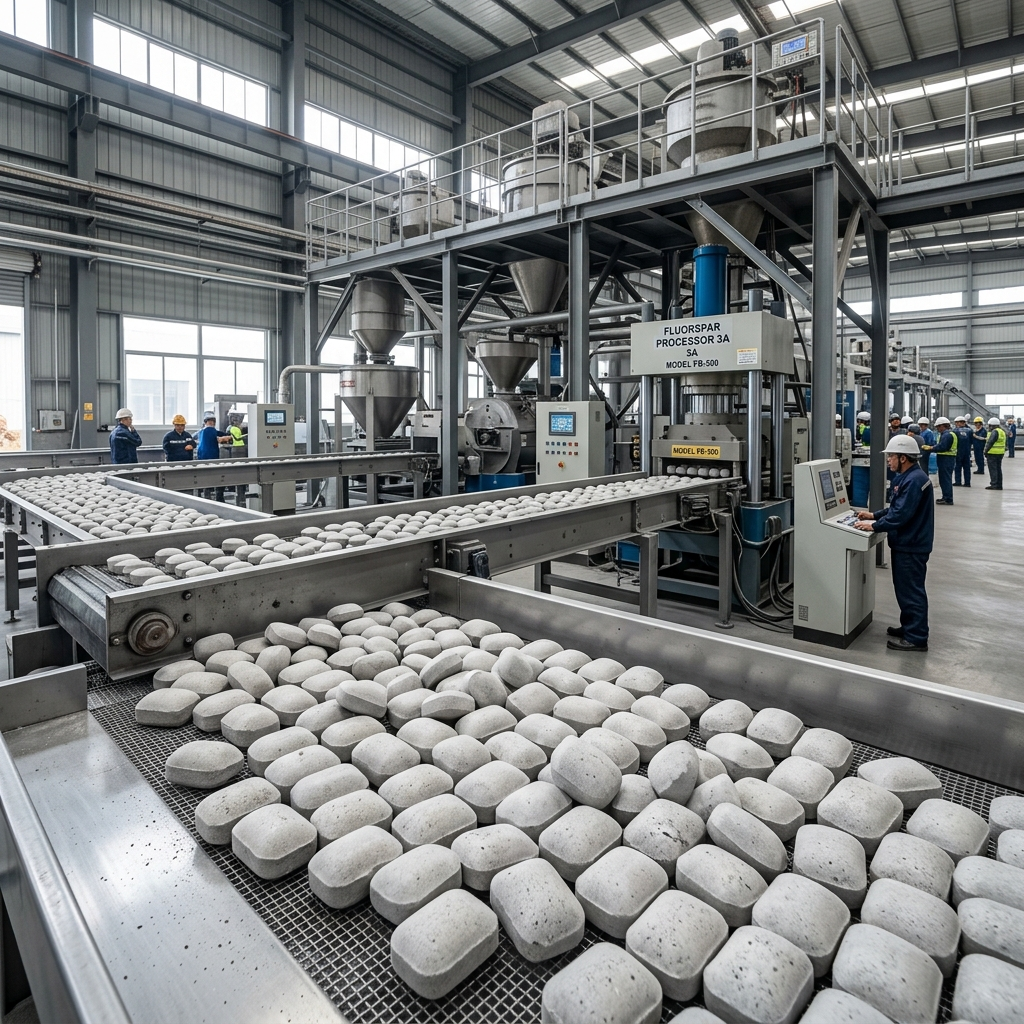
Introduction
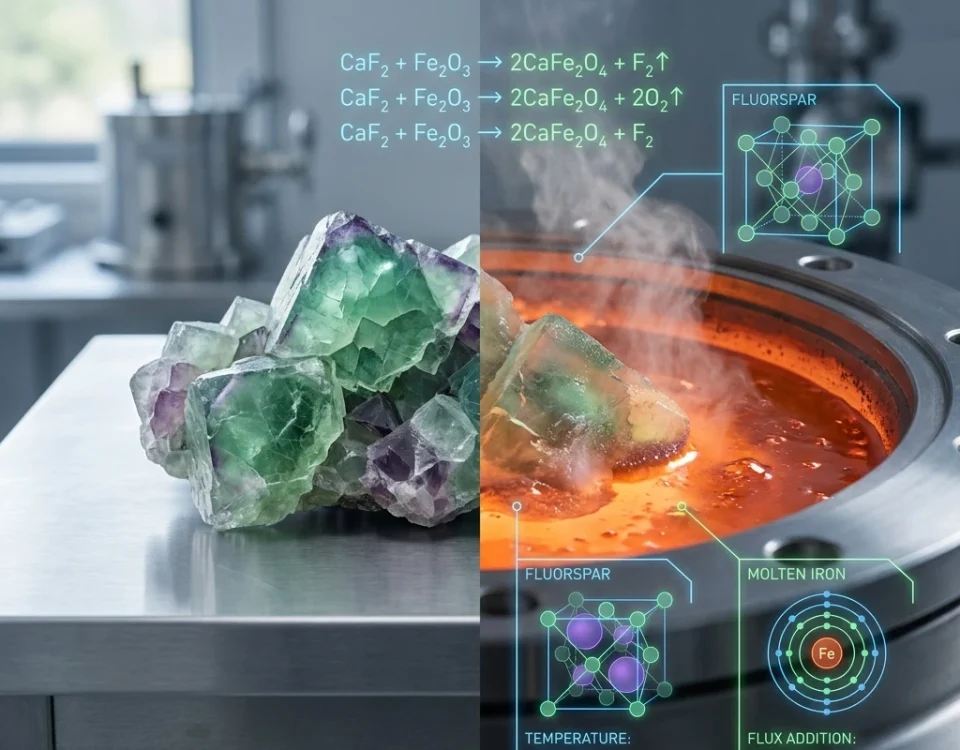
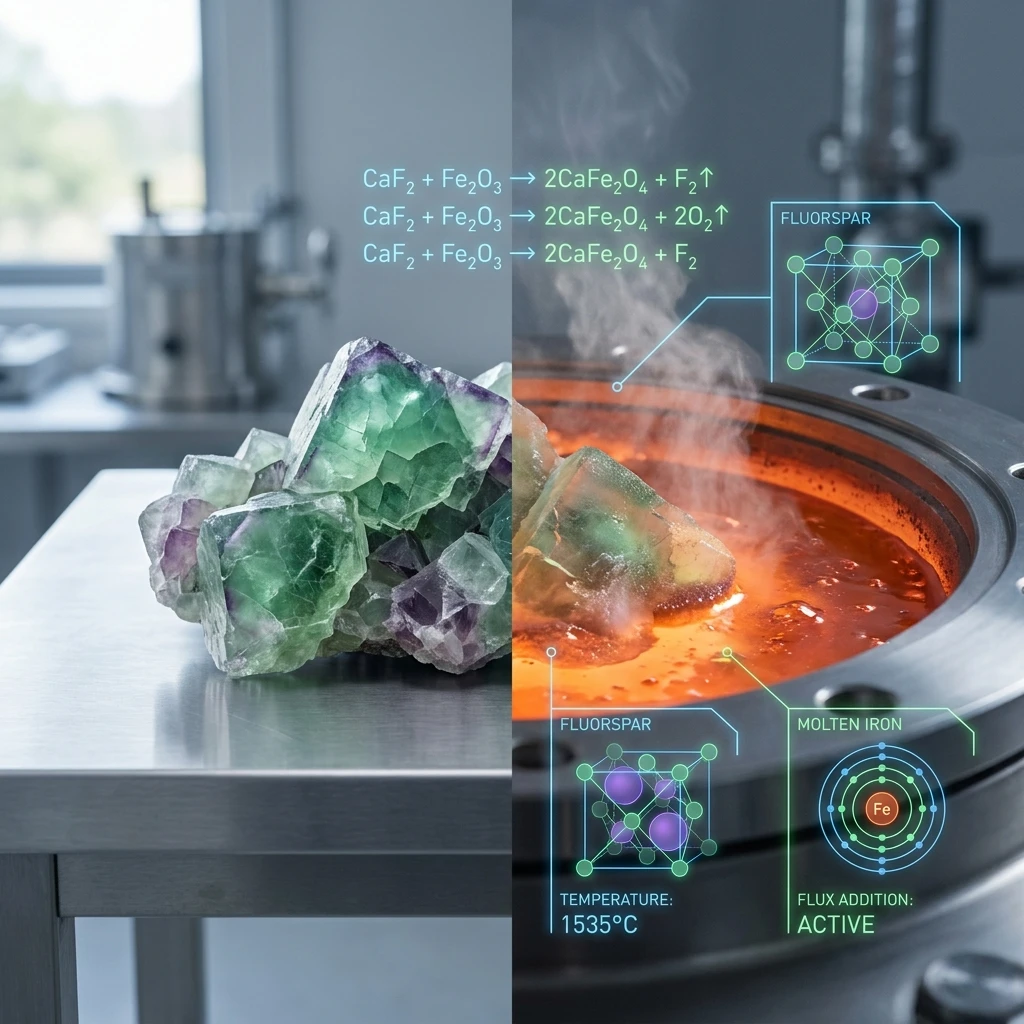
Fluorspar, also known as fluorite, is one of the most important industrial minerals used in a wide range of sectors, especially steelmaking, foundry operations, metallurgy, slag conditioning, chemical processes, and mineral-based industries. Owing to its role in reducing melting temperature, improving slag fluidity, assisting impurity removal, and regulating molten-phase behavior, fluorspar has become a strategically valuable raw material in many industrial supply chains.
However, the performance of fluorspar in industrial applications depends not only on its chemical grade, but also on its physical form, particle size distribution, handling characteristics, and charging behavior. In many industrial environments, the use of fine or powdered fluorspar can lead to material loss, dust generation, inconsistent charging, and lower operational efficiency.
For this reason, fluorspar briquettes have gained increasing attention as an engineered and more practical product form. By converting fine fluorspar particles into compact briquettes, industries can improve material handling, reduce waste, enhance charging efficiency, and make better use of fine mineral fractions that might otherwise have lower direct market value.
In this article, we examine what fluorspar briquettes are, how they are produced, how they differ from lump or granular fluorspar, and what key advantages they offer to industrial users.
What Are Fluorspar Briquettes?
Fluorspar briquettes are compressed and shaped products made from fluorspar fines or powder, either alone or combined with selected binders and additives. The main purpose of briquetting is to transform loose fine particles into a dense, stable, and easier-to-handle form suitable for industrial consumption.
In many mining and processing operations, a portion of the produced fluorspar is generated as fines, small particles, or powder. While these materials still contain economic value, their direct use in industrial processes can be problematic due to:
- dust formation
- material loss during handling and charging
- poor recovery in furnaces
- storage and transport difficulties
- inconsistent feeding behavior in industrial systems
Briquetting provides a practical solution by upgrading these fine materials into a more useful and value-added industrial product.
Why Is Fluorspar Produced in Briquette Form?
Fluorspar is produced in briquette form when industries require a material with more controlled size, strength, handling performance, and process behavior than loose powder or fines can offer.
The main reasons for producing fluorspar briquettes include:
- effective utilization of fluorspar fines and powder
- reduction of material loss during transport and use
- lower dust generation in industrial environments
- improved charging performance in furnaces and metallurgical units
- more uniform consumption during processing
- higher commercial value compared to untreated fines
In simple terms, briquetting helps convert a lower-efficiency fine material into an engineered product with improved industrial usability.
How Are Fluorspar Briquettes Produced?
The production process of fluorspar briquettes may vary depending on the final application, raw material quality, and available technology, but it generally includes several main stages:
1. Raw Material Preparation
At this stage, fluorspar fines or powder are evaluated and prepared in terms of particle size, moisture content, grade, and impurity level. Uniform raw material quality is essential for producing consistent briquettes.
2. Addition of Binders or Functional Additives
To achieve sufficient cohesion and mechanical strength, selected binders or additives may be introduced. The type and dosage of these materials must be carefully chosen so that they provide strength without negatively affecting industrial performance.
3. Mixing
The raw material and additives are blended uniformly to create a consistent feed mixture for briquetting.
4. Compression and Shaping
The prepared mixture is fed into a briquetting machine and compacted under pressure into a defined shape. Briquette size and geometry can be designed according to the needs of the end user.
5. Drying or Curing
The newly formed briquettes usually require drying or curing in order to reach the desired mechanical strength and transport durability.
6. Quality Control
Final briquettes are checked for parameters such as:
- compressive strength
- resistance to breakage
- moisture level
- dimensional uniformity
- dust generation tendency
- performance suitability for the intended industrial application
Difference Between Briquetted Fluorspar and Lump or Sized Fluorspar
Fluorspar can be supplied to the market in several physical forms, including:
- lump fluorspar
- sized/granular fluorspar
- powder fluorspar
- briquetted fluorspar
Each form has its own advantages and limitations depending on the application.
Lump fluorspar may be suitable for certain uses, but its particle size can be less uniform and its behavior during charging may vary. Powder fluorspar, while useful in some processes, can create serious issues in terms of dust, waste, and handling control.
Fluorspar briquettes are intended to combine the value of fine material with improved process usability. Compared with raw fines, briquettes generally offer:
- a more compact and stable form
- easier transportation and storage
- less dust generation
- better charging behavior in many industrial applications
- improved handling and inventory management
Benefits of Fluorspar Briquettes for Industry
The use of fluorspar briquettes can provide important technical, operational, and economic advantages for a range of industries. Depending on the process, the significance of each benefit may vary, but overall the advantages are substantial.
1. Reduced Material Loss
One of the main problems with powder or fine mineral products is loss during handling, transfer, and furnace charging. A portion of the material may be lost as dust or may fail to enter the process efficiently. Briquetting significantly reduces this waste.
2. Lower Dust Generation and Better Workplace Conditions
Powdered materials often create airborne dust in industrial environments, which can affect worker safety, housekeeping, and equipment maintenance. Due to their compact structure, fluorspar briquettes generate far less dust than loose powder.
3. Improved Charging Performance in Furnaces
In industries such as steelmaking, foundry operations, and other metallurgical processes, the way a material enters the furnace or molten system is highly important. Briquettes, because of their defined size and strength, usually provide more predictable and uniform charging behavior.
4. Better Utilization of Mineral Fines
In many mining and mineral processing plants, fines represent a considerable portion of total production. If these fines remain underutilized, part of the economic value of the mineral resource is lost. Briquetting offers a practical route to transform these fines into a marketable industrial product.
5. Easier Transportation and Storage
Briquettes are generally easier to package, move, stack, and store than powder materials. This is especially important for bulk suppliers and large industrial consumers.
6. Greater Uniformity in Consumption
When raw material enters a process in the form of briquettes with consistent dimensions, consumption becomes easier to control. This can contribute to better process stability and more reliable operating conditions.
7. Possibility of Product Design for Specific Industrial Needs
One of the major advantages of briquetting is that the composition, size, strength, and certain performance characteristics of the product can be adjusted according to customer requirements. This flexibility can become a significant competitive advantage in specialized industrial markets.
Industrial Applications of Fluorspar Briquettes
Steel Industry
One of the most important sectors for fluorspar consumption is steel production. In this industry, fluorspar is commonly used as a flux and slag conditioner. Briquetted fluorspar can help improve charging control and reduce consumption losses.
Foundry Industry
In some foundry applications, controlling slag and molten behavior is essential. Fluorspar briquettes can offer practical advantages over loose powder in terms of handling, consumption, and workplace cleanliness.
Metallurgy and Ferroalloy Production
In ferroalloy plants and other high-temperature metallurgical operations, the physical form of raw materials can influence process stability. Fluorspar briquettes are therefore an attractive option in such applications.
Processing and Recycling Units
In certain secondary processing and recycling operations, especially where fine particles need to be utilized efficiently, briquettes may provide both technical and economic benefits.
What Makes a Good Fluorspar Briquette?
Not all briquettes perform equally. A suitable fluorspar briquette should have enough strength to withstand transport and storage, while also performing effectively during industrial use.
The key characteristics of a good fluorspar briquette include:
- sufficient mechanical strength
- controlled moisture content
- uniform size and shape
- minimal dust generation
- adequate effective fluorspar content
- low levels of harmful impurities
- compatibility with the intended industrial process
If briquettes are poorly designed or improperly manufactured, they may break during handling, lose integrity in storage, or perform unsatisfactorily in the final application.
Important Considerations in Buying or Producing Fluorspar Briquettes
When purchasing or manufacturing fluorspar briquettes, appearance alone is not enough. Several key technical factors must be evaluated carefully:
Fluorspar Grade
The CaF₂ content is one of the most important quality indicators and must be aligned with the requirements of the target industry.
Type and Level of Impurities
The presence of silica, carbonates, sulfides, or other unwanted components can influence performance and market suitability.
Binder Type
The binder system should not introduce excessive impurities or negatively affect the industrial performance of the briquette.
Strength and Transport Resistance
The briquette must maintain its integrity during loading, transportation, unloading, and storage.
Process Compatibility
The requirements of steel plants, foundries, and other metallurgical users may differ. Therefore, the briquette should be selected or designed according to the final application.
Why Can Briquetting Create Added Value?
From an economic perspective, briquetting is not just a physical shaping step—it is a form of value addition. Many mining and mineral processing operations generate large volumes of fines that are harder to sell directly or yield lower profit margins.
Converting these fines into briquettes can:
- increase product marketability
- open access to new customer segments
- improve overall raw material utilization
- reduce waste generation
- enhance profit margins
For this reason, fluorspar briquettes can represent a win-win solution for both producers and industrial consumers.
Conclusion
Fluorspar briquettes are an engineered and practical form of industrial fluorite designed to improve usability, reduce waste, enhance charging control, minimize dust generation, and make better use of mineral fines. For industries such as steelmaking, foundry, metallurgy, and certain mineral processing operations, briquetted fluorspar can provide meaningful technical and economic advantages.
At a time when raw material efficiency, operational control, waste reduction, and value creation are becoming increasingly important, fluorspar briquetting offers an effective pathway for improving the industrial use of this mineral. However, the success of this approach depends directly on raw material quality, briquette design, binder selection, and compatibility with the end-user process.