What is Fluorspar and Why Is It Vital in Industry?
2025-07-07
Global Standards for Fluorspar Purity
2025-07-08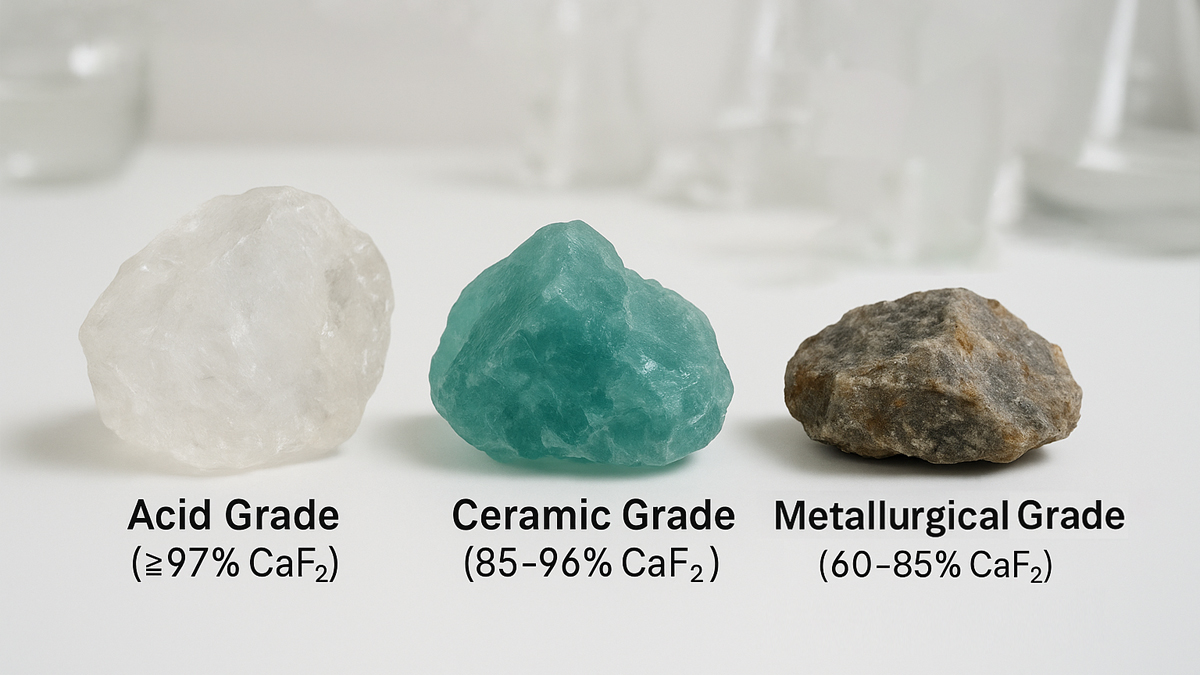
Introduction
In various industries, selecting the right raw materials plays a decisive role in the quality, efficiency, and final production cost. Fluorspar is one such vital mineral with unique properties widely used in industries such as steel, chemical, glass manufacturing, ceramics, and aluminum. However, many industry professionals might overlook that fluorspar is not a single uniform product but comes in three distinct grades with different properties and applications:
Metallurgical Fluorspar, Acid Grade Fluorspar, and Ceramic Grade Fluorspar
Understanding the differences between these grades is crucial for manufacturers, purchasing engineers, traders, and mining investors because each type of fluorspar, depending on purity, particle size, color, and other physical and chemical features, suits specific applications.
In this article, we review the main differences among these grades in a simple yet professional manner, illustrating why choosing the correct fluorspar grade can directly impact your industrial performance, production costs, and even your export market.
Metallurgical Grade Fluorspar (Met-Grade)
Metallurgical grade fluorspar, known internationally as Met-Grade Fluorspar, is one of the most widely used fluorspar types in industry. This grade typically contains 60% to 85% CaF₂ purity and is used as a flux in metallurgical processes.
Key Characteristics:
- CaF₂ Purity: ~60–85%
- Ash content (SiO₂ and other impurities): Relatively high compared to other grades
- Particle size: Usually crushed stone or granular
- Color: Often gray, brown, or dark green (due to impurities)
- Price: Lower than other grades
Primary use: Flux in steel and iron smelting industries
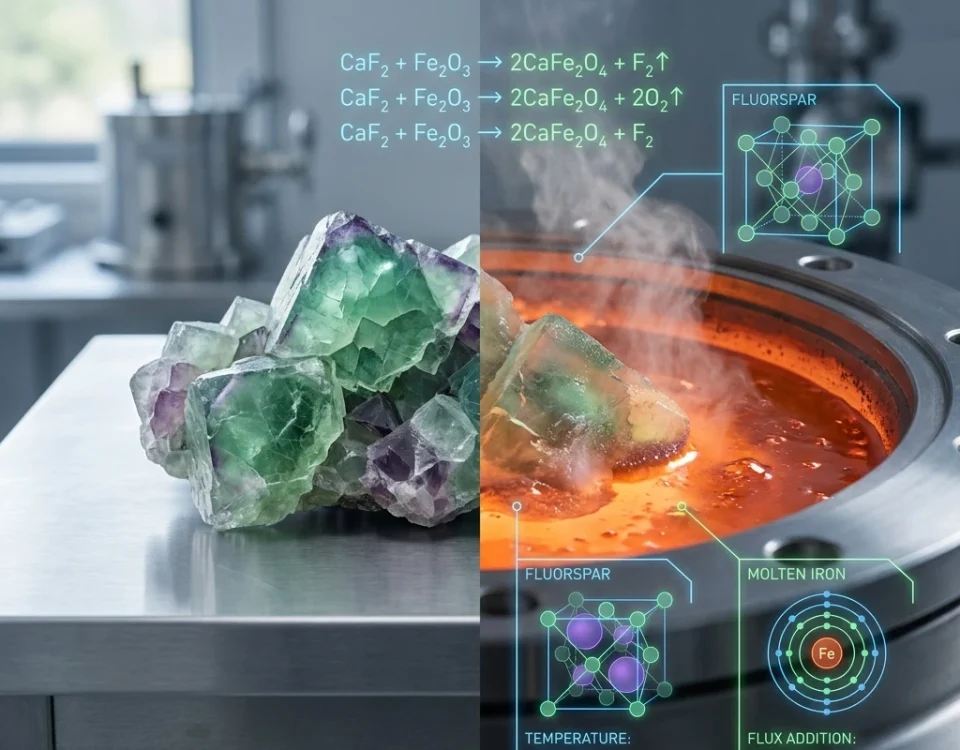
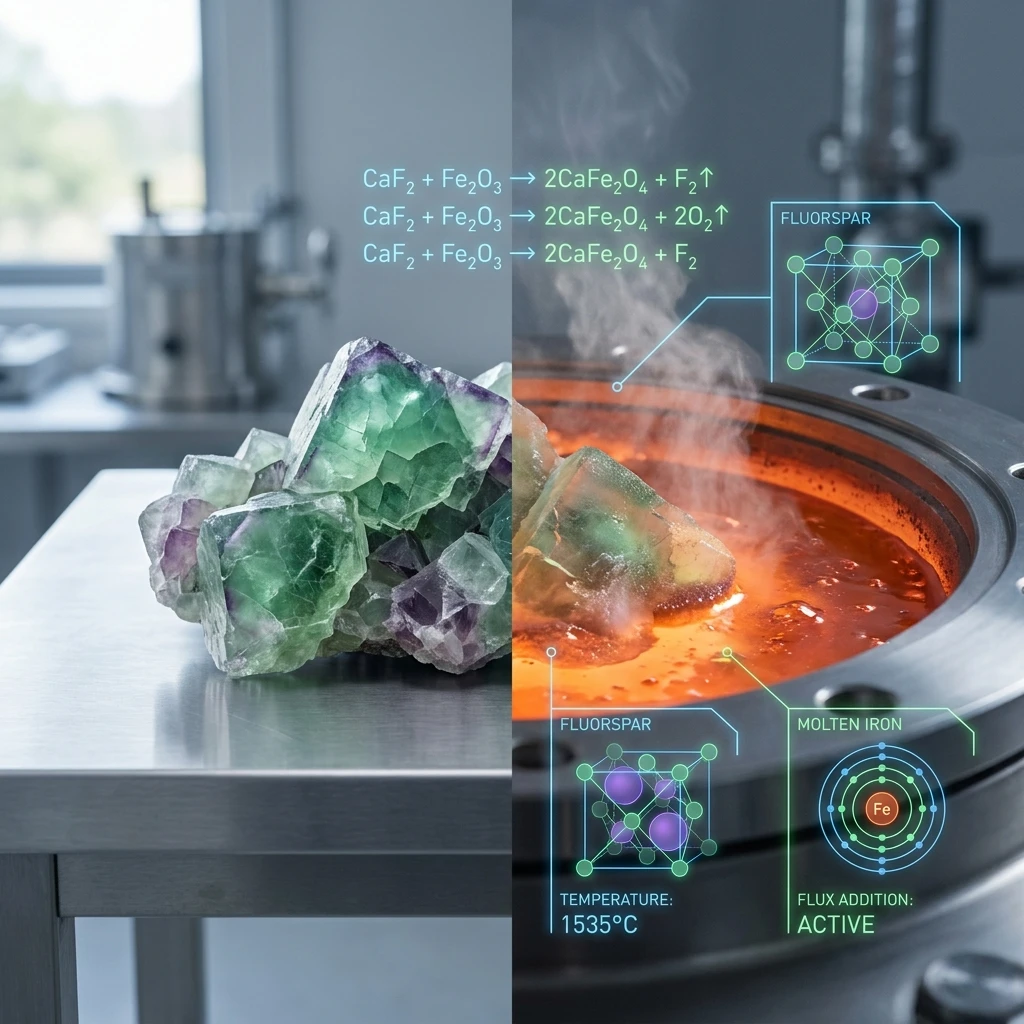
n steel, cast iron, copper, aluminum, and other metal industries, metallurgical fluorspar acts as a flux to lower melting points and slag viscosity, facilitating impurity removal (such as sulfur, phosphorus, and silica) from molten metal. In other words, metallurgical grade fluorspar helps the melting process proceed faster, cleaner, and with less energy consumption.
Advantages:
- Reduces energy consumption in furnaces
- Increases melting efficiency and operation speed
- Improves final metal quality
- Cost-effective for bulk applications
Limitations:
- Lower purity makes it unsuitable for sensitive chemical industries
- Uncontrolled impurities may affect metal quality
- Usually requires standardized particle size and packaging for export
Metallurgical fluorspar is an economical and efficient choice for steel plants and metal smelting industries. Despite its lower purity compared to acid and ceramic grades, its high consumption volume and critical role in lowering production costs make it one of the most demanded fluorspar grades in both domestic and international markets.
Ceramic Grade Fluorspar
Ceramic grade fluorspar, with purity between 85% and about 95% CaF₂, occupies a middle ground between metallurgical and acid grades. It is typically used in non-metallurgical applications, especially in tile and ceramic industries, glaze manufacturing, glass, and porcelain.
Since optical properties, transparency, color, and thermal stability are important in these industries, the fluorspar quality must be higher than metallurgical grade but not as sensitive as acid grade.
Key Characteristics:
- CaF₂ Purity: Usually 85–95%
- Particle size: Powdered, sieved, or granular depending on use
- Color: Often white or light grayish-white (light color is important)
- Impurities: Lower than metallurgical grade but still contains some silica, iron oxide, or carbonates
- Price: Higher than metallurgical grade but lower than acid grade
Industrial Applications:
- Tile and ceramic glazes: improves flow and surface gloss
- Glass manufacturing: lowers melting point and enhances transparency
- Sanitary ware and household porcelain: controls thermal and optical properties
- Advanced industrial ceramics: in special compositions such as heat or friction-resistant glazes
Advantages:
- Suitable purity for many semi-precision industries
- Improves appearance and final product quality
- Helps reduce firing temperature and saves energy
- Suitable for export to tile- and porcelain-producing countries
Limitations:
- Not suitable for highly sensitive chemical or acid production industries
- Sensitive to color and impurity levels
- More expensive than metallurgical but cheaper than acid grade
Ceramic grade fluorspar offers a balanced choice for industries needing high purity but not the stringent requirements of acid grade. This grade plays a significant role in improving the quality of glass, glaze, and ceramic products and enjoys substantial demand in export markets including India, Turkey, and Arab countries.
Acid Grade Fluorspar
Acid grade fluorspar, or Acid-Grade Fluorspar, with purity above 97% CaF₂, is the purest and most valuable type of fluorspar. It is specifically used in advanced chemical industries and is the primary raw material for producing hydrofluoric acid (HF), a powerful acid crucial in the production chain of hundreds of advanced industrial products.
Key Characteristics:
- CaF₂ Purity: Minimum 97%, often above 98%
- Impurities: Very low (less than 1% silica, iron, phosphorus, etc.)
- Particle size: Usually very fine powder or specialized granules
- Color: White to bluish-white (light color indicates high purity)
- Price: Highest among all fluorspar grades
Industrial Applications:
Acidic Fluorspar is primarily used for the production of hydrofluoric acid (HF), which serves as a fundamental substance for manufacturing dozens of advanced chemical compounds. Applications of this grade include:
- Chemical industries: production of fluorinated compounds, pesticides, pharmaceuticals, and polymer resins (e.g., Teflon)
- Oil and gas refining: HF as a catalyst in refineries
- Electronics and semiconductors: manufacturing circuits, boards, and protective coatings
- Uranium enrichment: nuclear fuel production processes
- Optical glass and specialized lenses production
Advantages:
- Very high purity and controlled quality
- Suitable for highly sensitive and strategic industries
- Broad export market with high added value
- Can be processed domestically due to Iran’s quality mineral reserves
Limitations:
- Requires precise extraction, crushing, and purification infrastructure
- Exports may face international restrictions (especially in sensitive areas like nuclear energy)
- Not cost-effective for general industries
Acid grade fluorspar is a strategic product with advanced applications that are irreplaceable in chemical and high-tech industries. Iran, with suitable reserves, can secure a strong position in the global acid grade market through investment in processing technology and upgrading production standards.
Technical Comparison of Fluorspar Grades
| Feature | Metallurgical Grade | Ceramic Grade | Acid Grade |
| CaF₂ Purity (%) | 60-85 | 85-95 | >97 |
| Common Color | Gray, dark green | White to light gray | White to bluish-white |
| Particle Size | Crushed or granular | Sieved powder or granules | Very fine powder or special granules |
| Main Application | Steel and metal smelting | Tiles, ceramics, glaze, glass | HF production and advanced chemical industries |
| Relative Price | Low | Medium | High |
| Target Market | Domestic & regional | Export to industrial countries | Specialized export markets |
| Advanced Processing Need | Low | Medium | High |
| Substitutability | Limited | Moderate | Very low |
As the table shows, each fluorspar grade has distinct specifications, applications, and markets. Understanding these differences helps buyers, producers, and exporters to:
- Make correct choices based on industrial needs
- Invest purposefully in fluorspar processing
- Avoid costly mistakes in purchasing or exporting
Tips for Choosing the Right Fluorspar Grade
Knowing the technical differences between fluorspar grades, the next step for any industrial buyer or user is selecting the appropriate grade. Wrong choice may lead to higher costs, reduced product quality, or even equipment damage. Here are practical guidelines:
- Know your industry precisely:
- Metallurgical grade suits steel, aluminum, and foundry industries economically.
- Ceramic grade fits tile, porcelain, ceramic, glass, and glaze production.
- Acid grade is necessary for chemical, petrochemical, refinery, or pharmaceutical sectors.
- Consider your budget and product quality sensitivity:
Overpaying for a higher grade than necessary wastes money without benefits. For example, low-temperature glaze manufacturers don’t need acid grade; ceramic grade suffices. However, for export-quality products, using a lower grade may damage brand reputation.
- Pay attention to color, particle size, and impurities:
In some industries (ceramics, glass), these factors directly affect final product color and transparency.
- Work with reputable suppliers:
Many fluorspar supplies in Iran are bulk with no accurate specifications. Buying from suppliers with reliable chemical analysis, standard particle size, and industrial experience reduces risks.
- Avoid buying the wrong grade:
Whether cheap or expensive, a wrong grade purchase is a loss. Smart choice leads to maximum efficiency, minimum cost, and highest final quality.
Conclusion: Understanding Fluorspar Grades is Key to Smart Decision-Making
Fluorspar, despite its relatively unknown name, plays a fundamental role in many industries. It is not a single product but comes in three main grades — metallurgical, ceramic, and acid — each with very different properties and uses.
We learned that:
- Metallurgical grade is suitable for metal smelting and heavy industries with medium purity and economic price.
- Ceramic grade balances quality and price for glass, glaze, and porcelain industries.
- Acid grade, with very high purity, is the only choice for sensitive chemical and advanced technology sectors.
Recognizing these differences, especially in competitive markets and raw material price fluctuations, can be a winning factor for industrial players.
A wise choice is not just better purchasing; it is a strategic step toward sustainable production, successful exports, and long-term industrial development.